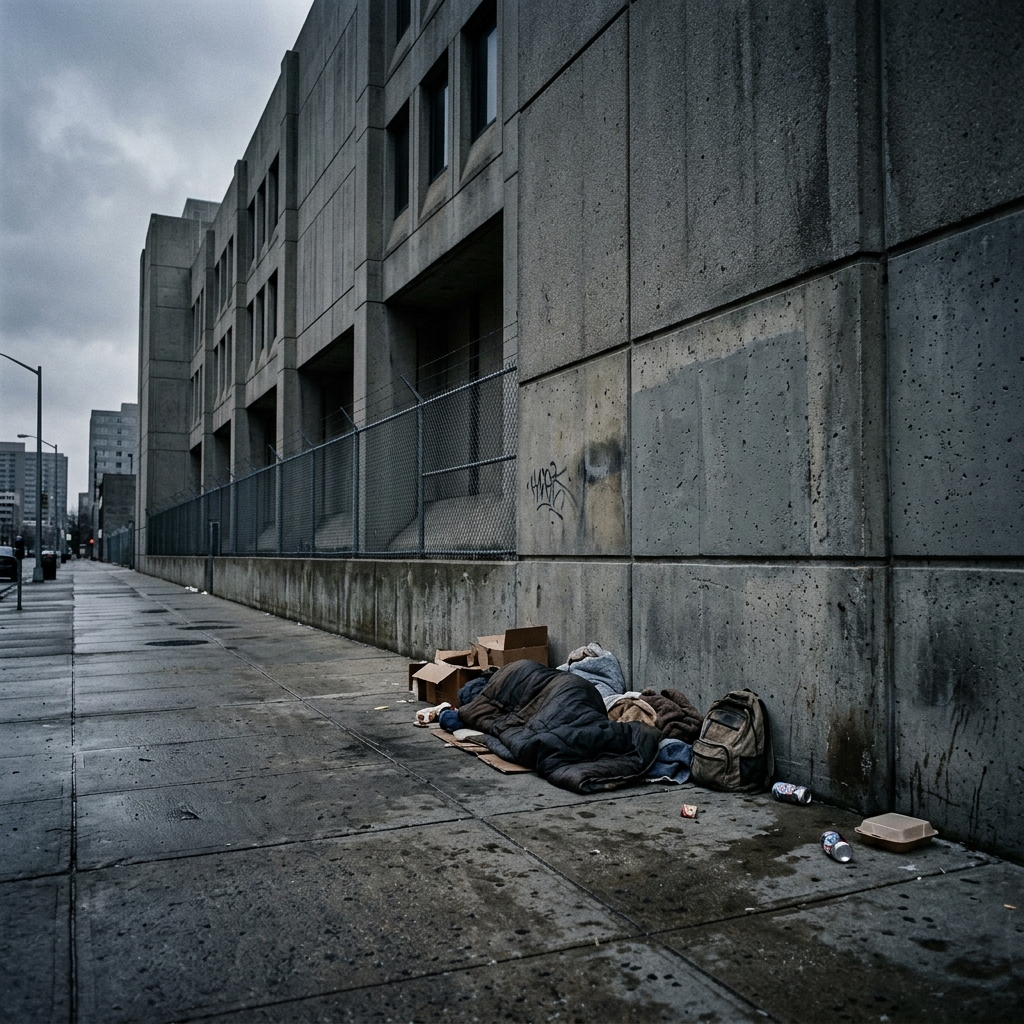

The Forgotten First Responders: Exposing the Trauma Factory on the Frontlines of Calgary's Homelessness Crisis
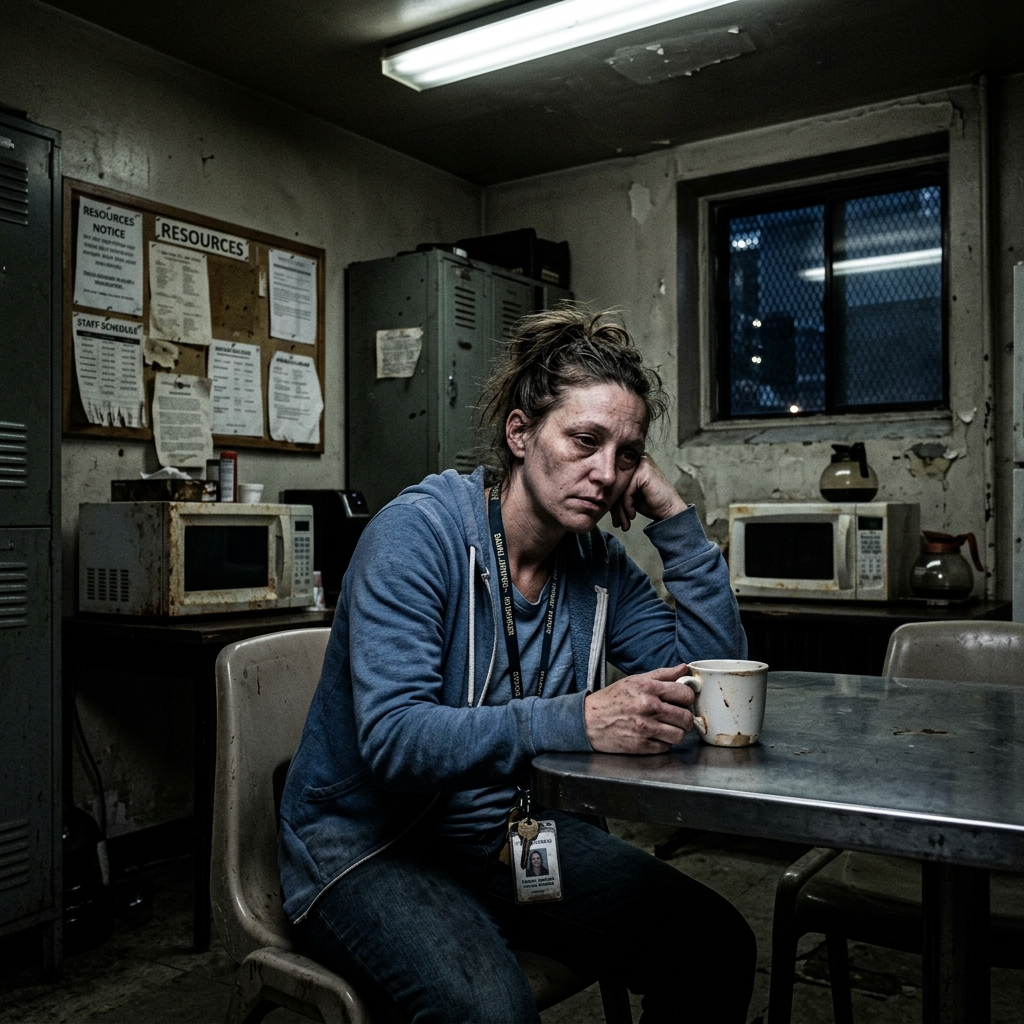
When we talk about first responders, we usually think of flashing red lights, police badges, and paramedics rushing into a scene. We picture the people who are trained, paid, and mentally prepared to handle the most stressful moments of human life. But in Calgary, there is another group of first responders who handle these exact same crises every single day—without the badges, without the union protections, and without the public respect.
These are the frontline workers in Calgary’s Unhoused shelters, outreach vans, and harm-reduction sites. They are the "forgotten first responders" of our city, and they are operating under a state of continuous psychological siege [157].
According to a landmark, peer-reviewed study led by researchers Dr. Jeannette Waegemakers Schiff and Dr. Annette M. Lane, which analyzed 472 frontline workers across 23 different homelessness organizations in Calgary and Edmonton, 33% of the frontline workforce suffers from clinical Post-Traumatic Stress Disorder (PTSD) [165]. This rate of psychiatric illness is not just higher than the general public; it frequently exceeds the rates reported by traditional police and emergency paramedics [165].
You can read the official University of Calgary breakdown of this study directly at the UCalgary News Portal [165].
1. Dismantling the "Stress" Monolith: The Clinical Architecture of Trauma
To understand why our city’s shelter staff are burning out at a catastrophic rate, we have to look past the generic word "stress." The trauma absorbed on the shelter floor is complex and must be broken down into five distinct psychiatric categories [158]:
Primary Trauma
This is the result of direct, immediate violence and crisis [159]. Frontline workers are physically assaulted, verbally threatened with weapons, and must regularly manage the immediate aftermath of life-or-death situations [159]. This includes discovering deceased clients in shelter beds or performing emergency chest compressions during acute drug overdoses [159].
An exhaustive national study on the homelessness sector published by the Australian Housing and Urban Research Institute (AHURI) reveals the staggering scale of this violence: 59% of frontline workers have been physically assaulted on the job, 60% have faced weapons in the workplace, and 96% endure verbal aggression [164].
Secondary Traumatic Stress (STS)
You do not have to be the one dying to be traumatized. Secondary Traumatic Stress is an acute injury caused by the continuous, deep emotional energy required to care for highly traumatized people [159]. Because frontline social work requires active empathy, workers absorb their clients' suffering [159]. Over time, this empathetic engagement physically alters the worker's nervous system, causing nightmares, hyperarousal, and severe anxiety [159]. The symptoms are identical to PTSD [159].
Vicarious Traumatization
Unlike Secondary Traumatic Stress, which is an acute emotional shock, vicarious traumatization is a slow, permanent shift in how a worker views the world [160]. When you spend years absorbing narratives of severe child abuse, colonial violence, and institutional betrayal, your core beliefs about safety, justice, and human nature are permanently shattered [160]. This cumulative toll is documented in detail in clinical journals like PubMed [161].
Organizational Burnout
While trauma is caused by the content of the work, burnout is caused by the context [161]. It is the physical and mental exhaustion driven by low wages, administrative friction, and massive caseloads [161]. When workers are expected to perform the duties of psychiatric nurses and crisis negotiators for less than $50,000 a year, the system structurally guarantees burnout [170].
Moral Injury
This is perhaps the most painful, invisible wound of all [162]. A moral injury occurs when a worker is forced by resource scarcity to make decisions that violate their deepest ethical beliefs [162]. In Calgary, this happens every single night when a worker has to look a freezing, severely ill person in the eye and turn them back onto the concrete because there are zero beds left in the system [162, 235]. The worker is forced to absorb the moral weight of a society that treats human housing like a speculative stock portfolio [150].
2. Precarity in the Workplace: The Demographic Crisis
This psychiatric crisis is made worse by the demographic vulnerability of the workforce itself [168]. Who is executing this high-intensity crisis management on our streets?
- The Lack of Experience: The homelessness sector suffers from a massive turnover rate. 43% of frontline staff have been on the job for less than two years, and 75% have tenures under five years [169]. This means there is a critical shortage of experienced, senior mentors available to help young staff process intense trauma for the first time [169].
- The Education Deficit: More than half of the workforce possesses two or fewer years of post-secondary training, yet they are expected to manage severe substance-use crises and active psychiatric emergencies without clinical supervision [169, 172].
- Wages Adjacent to Poverty: An estimated 71% of Canadian shelter workers earn less than $50,000 annually [170]. Frontline workers are navigating their own severe financial precarity and rental housing anxieties while trying to manage the extreme poverty of their clients [170].
- The System of Last Resort: When other social systems fail, the fallout land on the shelter floor [172]. In studies, 75% of frontline staff cited the failure of allied services (like mental health crisis teams, child protection agencies, and addiction treatment beds) as their primary source of severe occupational stress [172]. Shelter workers are expected to act as medical and psychiatric triages without any of the corresponding pay or clinical support [172].
3. The Fallacy of "Self-Care" and the Scourge of Blame Culture
Historically, when workers experience psychological distress, shelter organizations point them toward individual self-care [173]. They are told to practice mindfulness, perform breathing exercises, or go to the gym [173]. While these habits are healthy, relying on them as a primary solution is a form of institutional deflection [173]. It shifts the responsibility of a broken, traumatizing work environment onto the individual worker, blaming them for not being "resilient" enough [173].
Worse, standard safety reporting protocols often foster a punitive "blame culture" [175]. When a crisis occurs—such as a violent altercation or a client overdose—the mandatory incident reporting process focuses heavily on investigating the worker's compliance rather than their psychological safety [175]. The trauma of the worker is erased and logged only inside the client’s folder as a clinical file note [175]. This is discussed in detail in safety analyses published by Canadian Occupational Safety [175].
Unlike fire or police departments, most Unhoused-serving agencies lack union-backed protocols that allow for paid administrative leave to decompress after witnessing a severe crisis, such as a client death [176]. Workers are expected to immediately return to the floor, forcing them to use standard sick leave or simply bottle up the hyperarousal [176].
4. Algorithmic Moral Injury: The Technological Frontier
In recent years, the sector has turned to data systems and artificial intelligence to manage waitlists and allocate resources, coordinated by agencies like the Calgary Unhoused Foundation [187]. These tools are designed to streamline operations through training found at the HMIS Portal [187].
However, the implementation of automated "Housing Allocation Algorithms" (HAA) has introduced a new psychological hazard: algorithmic moral injury [178]. Frontline workers experience severe distress and a complete loss of agency when AI-generated risk scores prioritize housing in a way that directly contradicts their own clinical judgment and human connection [178].
When a worker knows a client is in imminent physical danger but is barred by management from overriding an algorithmic score that deems them "not vulnerable enough," the resulting moral injury is devastating [178]. As explored on the Unhoused Hub, while technology can help organize data, it must always remain subordinate to human empathy and clinical discretion [178].
5. Re-Architecting the Frontlines: Evidence-Based Solutions
To protect the psychological integrity of our forgotten first responders, we must abandon the myth of individual resilience and implement structural, systemic reforms:
Macroeconomic Relief: Unconditional Cash Transfers
The most effective way to reduce frontline worker trauma is to reduce the volume of clients trapped in the emergency shelter system [179]. The BC New Leaf Project randomized trial proved that providing unhoused individuals with a single, unconditional cash transfer of $7,500 CAD allowed them to move into stable housing 99 days faster, saving the public shelter system $8,100 per person annually [180]. By rapidly housing people before they develop compounding, complex trauma, we drastically lower the secondary traumatic stress transferred to the frontline workforce [180].
Psychologically Informed Environments (PIEs)
We must redesign our shelter spaces [182]. This means eliminating sterile, panoptic, carceral architectures in favor of physically safe layouts that promote de-escalation [182]. Crucially, the PIE model mandates embedding reflective practice and clinical supervision into the weekly work schedule, allowing staff to process the emotional residue of crisis work with a trained clinician [182, 183].
Operational Work Design & The Two-Worker Model
We must change how daily shifts are run. High caseloads and staff shortages are the primary drivers of burnout [184]. Organizations must implement strict job rotation, moving staff between high-intensity crisis roles and lower-intensity administrative tasks to give their nervous systems time to recover [184].
Furthermore, to guarantee physical safety, a mandatory "two-worker model" must be universally enforced for all outreach operations, encampment visits, and high-risk interventions [185]. Isolation in the field is a major multiplier of trauma; no worker should ever have to navigate a volatile crisis alone [185].
Specialized Employee Assistance Programs (EAPs)
Generic, telephone-based counseling programs are completely inadequate for managing the profound moral injury and vicarious trauma of witnessing repeated client deaths and systemic neglect [186]. Funding bodies must establish and fund sector-specific Employee Assistance Programs delivered by specialized trauma clinicians [186]. This mirrors the psychological support structures provided to the police and military, formally recognizing the frontline worker as a true first responder [186].
Conclusion: Caring for the Caregivers
The crisis of homelessness in Calgary is not an organic tragedy; it is an engineered reality sustained by systemic austerity and a hyper-financialized housing market [12, 150]. But as we fight to reform these policies, we cannot ignore the human cost to the workers holding our collapsing social safety net together [188].
We cannot expect to build a trauma-informed system of care for our unhoused citizens while we continue to operate a trauma-producing system of employment for our frontline workers [188]. If we want to protect the dignity and future of the unhoused, we must start by fiercely protecting the physical safety, psychological integrity, and economic security of the workforce dedicated to their survival [190].
References and Verified Sources
- UCalgary PTSD Frontline Study: University of Calgary News
- Tandfonline Frontline Burnout Study: Taylor & Francis Online
- PubMed Vicarious Trauma Study: National Library of Medicine
- AHURI Frontline Protection Report: Australian Housing and Urban Research Institute
- Calgary Unhoused Foundation Role: CHF About Us
- Unhoused Hub AI Research: Canadian Observatory on Homelessness
- Canadian Occupational Safety Compliance: COS Safety Magazine